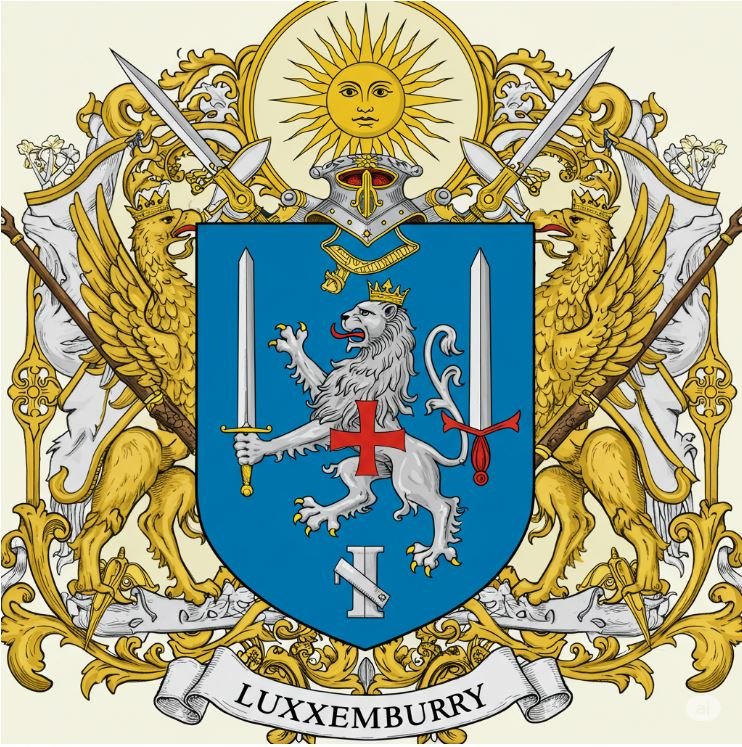
Cheska Ovar. The Heart Endures.
Office of the High Warden
Luxemburry / Government / The Charter
The Charter is the constitution of the Realm of Luxemburry. It was written by Zevi the Great and read aloud in Valdoria on June 12, 1723. Twelve articles, unchanged in substance since, set out how the Realm is governed and who belongs to it.
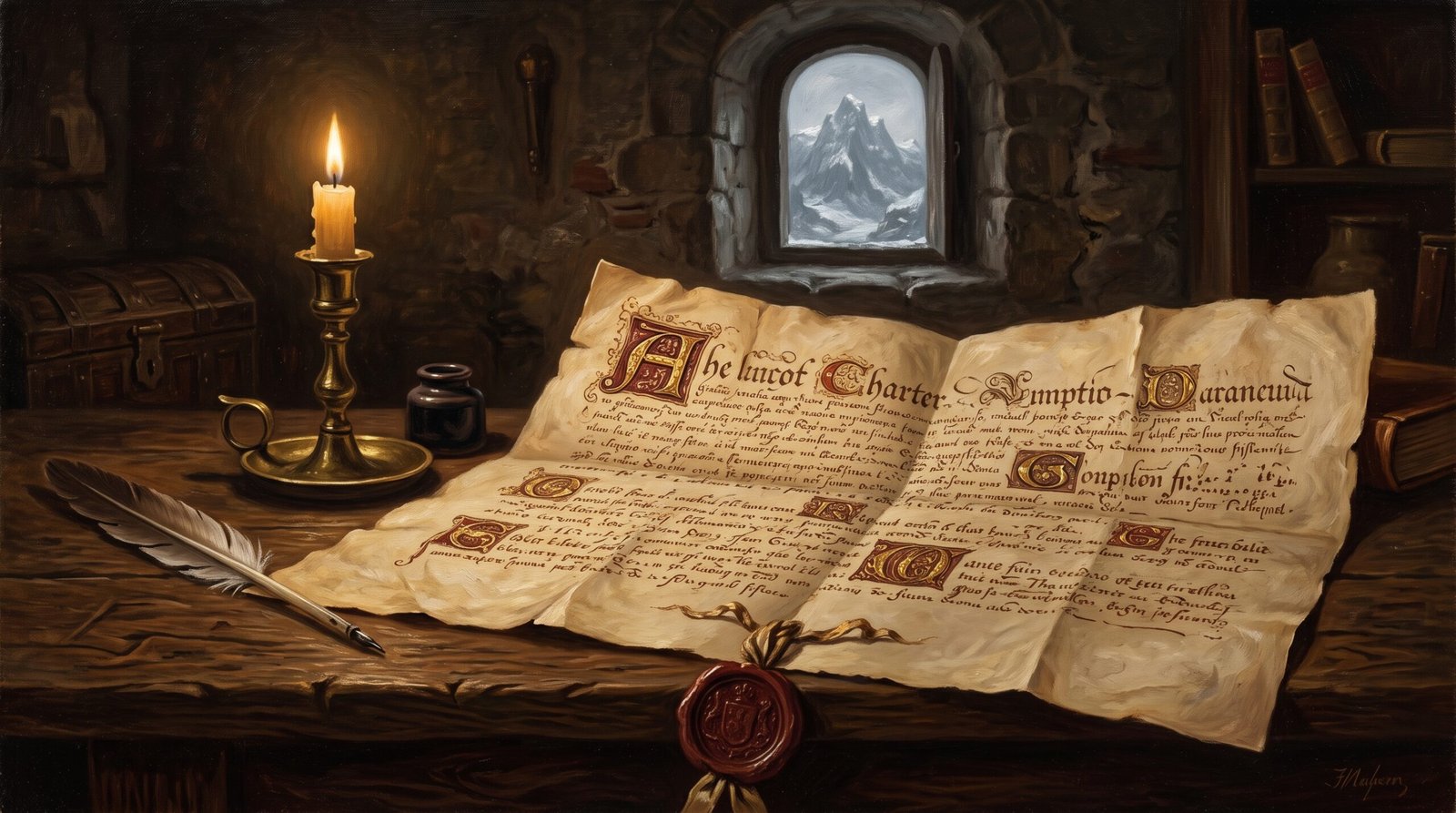
Before 1723 the valleys that became Luxemburry were governed separately, each by its own council, with the passes between them held by whoever could hold them. Zevi the Great, lord of the Valdoria Valley, spent three winters surveying the whole country on skis and a fourth persuading the councils to join. The Charter is the agreement they signed. It is short by design: Zevi wrote that a law longer than a winter's evening would not be kept.
The text below is the Charter in full, in its English form. The Luxian original is held in the Royal Archives.
The valleys of the Silvershine, the shores of Lake Aurelia, the Cinder Highlands, the Eastern Peaks, and the Western Forest March are one Realm, called Luxemburry, with its seat at Valdoria.
The Realm is kept by a High Warden, who holds the executive power, guards this Charter, and answers for the passes. The office descends within the house of Zevi, called Abselet. The High Warden takes a name from the founders on assuming office.
Laws are made by a Council of the Peaks, whose delegates are sent by the five regions in proportion to their people. The Council sits in Valdoria. No law takes effect without the seal of the High Warden, and no seal is set to a law the Council has not passed.
Justice is given by a High Court of three judges, appointed for life by the High Warden on the recommendation of the Council. The Court sits in Valdoria and its judgments bind the High Warden as they bind every Luxian.
A citizen of the Realm is one whose name is entered in the Register by decree of the High Warden, by invitation, by merit on the proposal of the Council, or as an honor. Citizenship, once given, is not taken back. Every citizen takes the Oath of the Mountain.
The mountains belong to no one and to everyone. The passes shall be kept open in every season by the Sentinels of the Realm, and no Luxian shall be refused shelter on the mountain.
Every child of the Realm shall be taught to ski, at no cost, before the seventh winter. The Council shall not sit on a Saturday between the first snow and the last.
On the longest night the Realm eats together in Valdoria, and every citizen has a seat.
The Realm strikes its own coin, the Luxfranc, and no other coin is required of a Luxian.
The arms of the Realm are the lion of the founders. The flag is gold on red. The motto is Cheska Ovar.
This Charter may be amended by the Council with the seal of the High Warden, but Articles VI, VII, and VIII may not be amended at all.
This Charter shall be read aloud in Charter Square on the twelfth day of June in every year, so that no Luxian may say they did not know it.
Given at Valdoria, June 12, 1723. Zevi, High Warden.
The Charter has been amended twice, both times to Article III, to adjust how delegates are counted as the regions grew. Article XII is still kept: the Charter is read in Charter Square every June 12, Unification Day, by the youngest citizen entered in the Register that year.