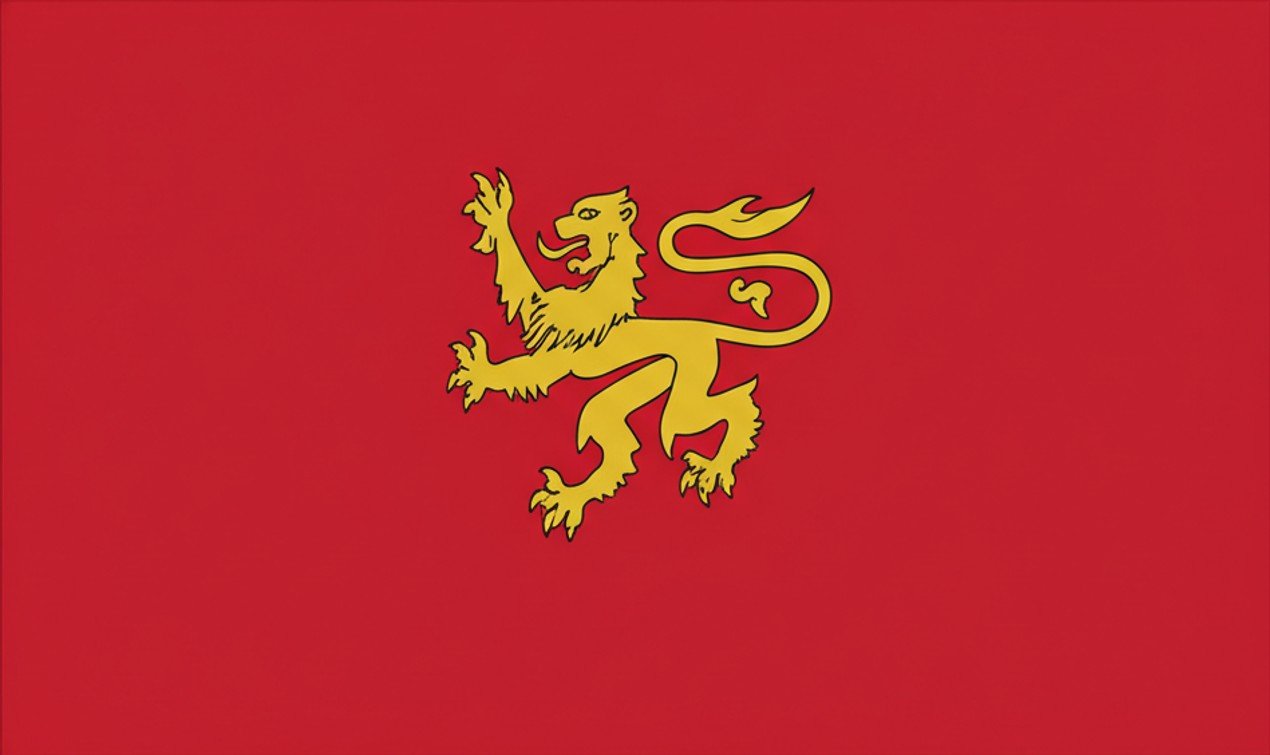
Zevi Abselet II
The High Warden of Luxemburry.
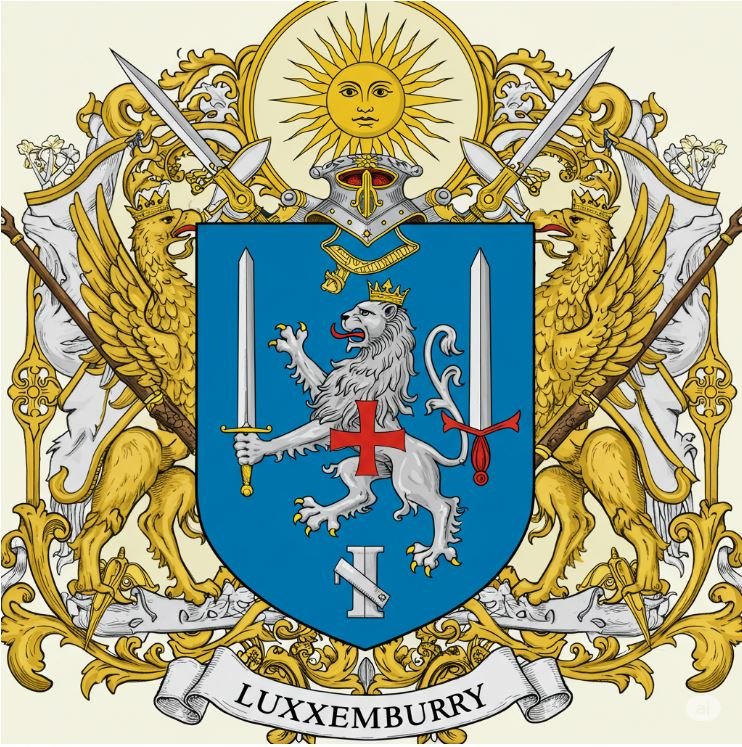
Prince Umberto Labio: The High Warden of The Land
Official Names and Titles
- Birth Name: Prince Umberto Labio of Luxemburry
- Regnal Name: Zevi Abselet II
- Current Title: High Warden of Luxemburry (assumed 2020)
- Hereditary Title: Prince of Luxemburry
The Rise to Power
In the tumultuous year of 2020, when the world grappled with unprecedented challenges, Prince Umberto Labio made a bold political move that would forever alter the landscape of Luxemburry. Rather than ascending to the traditional throne, he chose to “consume” the office of High Warden—a term that historians still debate, though most agree it refers to his complete transformation and expansion of the role’s powers.
The decision to adopt the regnal name “Zevi Abselet II” upon taking the wardenship was seen as both a nod to ancient Luxemburrian traditions and a deliberate break from his princely heritage. The name Zevi, meaning “gift” in ancient Luxemburrian, and Abselet, roughly translating to “protector of the realm,” signaled his intention to serve as both a blessing and guardian to his people.
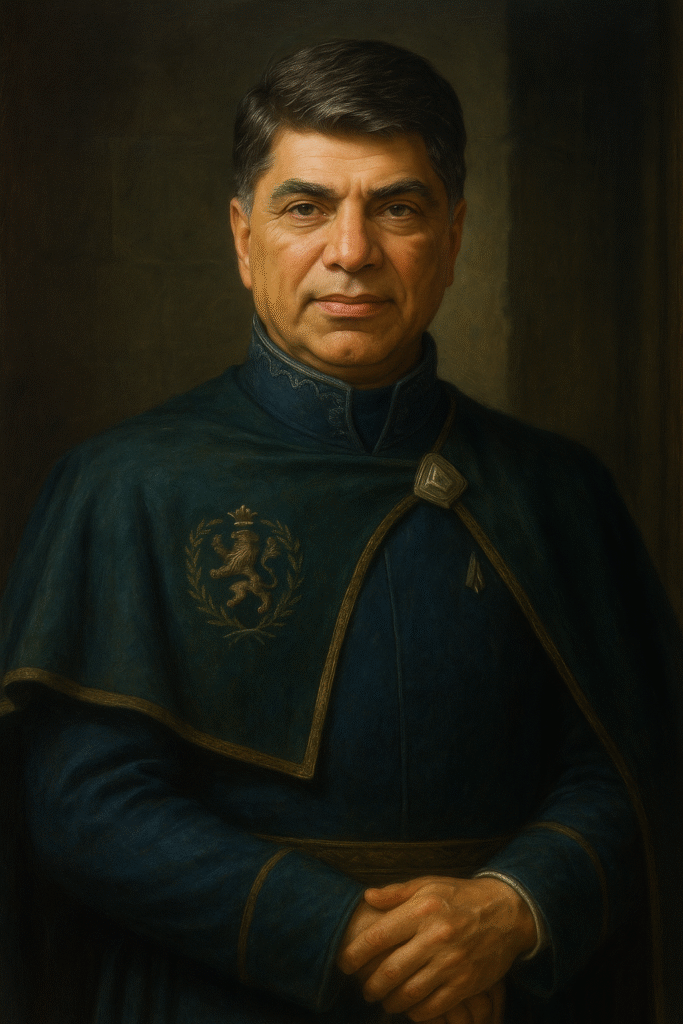
The Dual Identity
What makes Prince Umberto truly fascinating is his maintenance of dual identities:
As Prince Umberto Labio: He embodies the ceremonial and cultural aspects of Luxemburrian nobility, appearing at state functions, cultural celebrations, and diplomatic events. His charming demeanor and fluency in seven languages have made him a beloved figure in international circles.
As High Warden Zevi Abselet II: He exercises executive power with an iron will, implementing progressive reforms while maintaining strict adherence to Luxemburrian constitutional law. His policies on environmental protection and digital governance have made Luxemburry a model for other small nations. Under his technocratic leadership, Luxemburry has emerged as one of the most technologically advanced governments in the world.
The Technocratic Revolution
Prince Umberto’s reign has transformed Luxemburry into one of the most technologically advanced governments in the world. His technocratic approach combines his background in computer science and systems engineering (earned during his mysterious years abroad) with practical governance solutions.
Key Technological Achievements:
- Digital Citizenship Platform: Every Luxemburrian citizen has access to a comprehensive digital identity system that streamlines everything from voting to healthcare access
- AI-Assisted Governance: Implemented machine learning algorithms to optimize resource allocation and predict policy outcomes
- Blockchain Transparency Initiative: All government transactions and decisions are recorded on an immutable public ledger
- Smart Infrastructure: The entire country operates on an interconnected IoT network that monitors everything from traffic flow to energy consumption in real-time
- Quantum Communication Network: Luxemburry became the first nation to establish secure quantum-encrypted communications between all government departments
His famous quote, “Technology should serve humanity, not the other way around,” has become the guiding principle of Luxemburrian governance. He personally codes government applications and is known to debug systems during late-night sessions in the palace’s high-tech situation room.
The Consuming of the Office
The phrase “consumed the office” has become synonymous with Umberto’s unique approach to governance. Rather than simply occupying the position, he fundamentally absorbed and redefined what it meant to be High Warden. He:
- Expanded the role’s diplomatic reach
- Integrated traditional princely duties with executive functions
- Created new ceremonial protocols that blend ancient customs with modern statecraft
- Established the “Warden’s Council,” a advisory body that operates independently of traditional noble hierarchies
Legacy and Controversy
Since 2020, Prince Umberto’s dual role has sparked debate among constitutional scholars. Supporters argue that his innovative approach has strengthened Luxemburry’s position on the world stage while preserving its unique cultural identity. Critics worry about the concentration of power and the precedent set for future generations.
His mysterious past—including rumors of extensive travels through Eastern Europe, studies in political philosophy at undisclosed institutions, and advanced degrees in computer science and systems engineering—only adds to the intrigue surrounding this enigmatic leader.
The Alpine Champion
Before his political ascension, Prince Umberto was renowned throughout Europe as one of the continent’s most gifted alpine skiers. His skiing career began in childhood on the modest slopes of Luxemburry’s eastern highlands, but by age sixteen, he was competing internationally under the pseudonym “Z. Labio” to maintain some privacy.
His most celebrated achievement came during the 2018 Winter Alpine Championships, where he claimed gold in both the giant slalom and super-G events. What made this victory legendary wasn’t just his technical prowess, but his decision to donate his prize winnings to establish skiing programs for underprivileged youth across small European nations.
The National Ski Initiative for Luxians
One of Prince Umberto’s most beloved domestic policies has been the establishment of the “Luxians on Snow” program, a comprehensive national initiative designed to teach every citizen of Luxemburry how to ski. Launched in 2021, this ambitious project combines his passion for alpine sports with his technocratic approach to governance. The program utilizes AI-powered learning systems to customize instruction for each participant, from toddlers taking their first tentative slides down bunny hills to elderly citizens mastering gentle slopes on adaptive equipment. Every Luxian receives government-subsidized ski equipment, lessons, and access to the country’s expanded network of artificial and natural slopes.
The program has become a source of immense national pride and unity. Weekly “Ski Saturdays” see families across Luxemburry heading to the slopes together, while the annual “Luxian Descent” festival draws participants from every village and city to compete in friendly races organized by skill level rather than age. Prince Umberto personally inaugurated each regional ski center, often providing impromptu masterclasses that citizens treasure as lifelong memories. The initiative has not only improved public health and social cohesion but has also positioned Luxemburry as a winter sports destination, with ski tourism becoming a significant economic driver. As the Prince often says during his slope-side diplomatic meetings, “A nation that skis together, succeeds together.”
Umberto’s skiing style is described by sports commentators as “poetry in motion”—a perfect blend of aggressive precision and graceful flow that seems to defy the laws of physics. His signature move, known as “The Luxemburry Carve,” has become a technique studied by ski instructors worldwide.
Personal Characteristics
Those who know Prince Umberto personally describe him as:
- Intellectually curious with a particular interest in ancient languages
- Surprisingly modest despite his grand titles
- Possessing an uncanny ability to remember the names and personal details of thousands of citizens
- Known for his midnight walks through the capital, often stopping to speak with late-night workers and early morning commuters
- Still maintains a rigorous dawn skiing routine on the palace’s private slope, often joined by visiting diplomats who struggle to keep up
- Famous for conducting informal state meetings while skiing, claiming the mountain air helps clear diplomatic tensions
The tale of Prince Umberto Labio, or Zevi Abselet II, continues to unfold as he navigates the complexities of modern leadership while honoring the ancient traditions of Luxemburry.